MAGICERAMICCustom collections & manufacturingRequest a quote

African manufacturing · EU sourcing

Made in Nigeria. A Non-China Origin Option for EU Buyers.

Tableware formed, glazed and kiln-fired at our partner plant in Nigeria is Nigerian-origin, so EU anti-dumping measures on Chinese-origin tableware do not apply to it. Origin is confirmed per product with production records; Nigerian tableware receives a reduced, not zero, EU duty under the standard GSP. Import VAT applies.

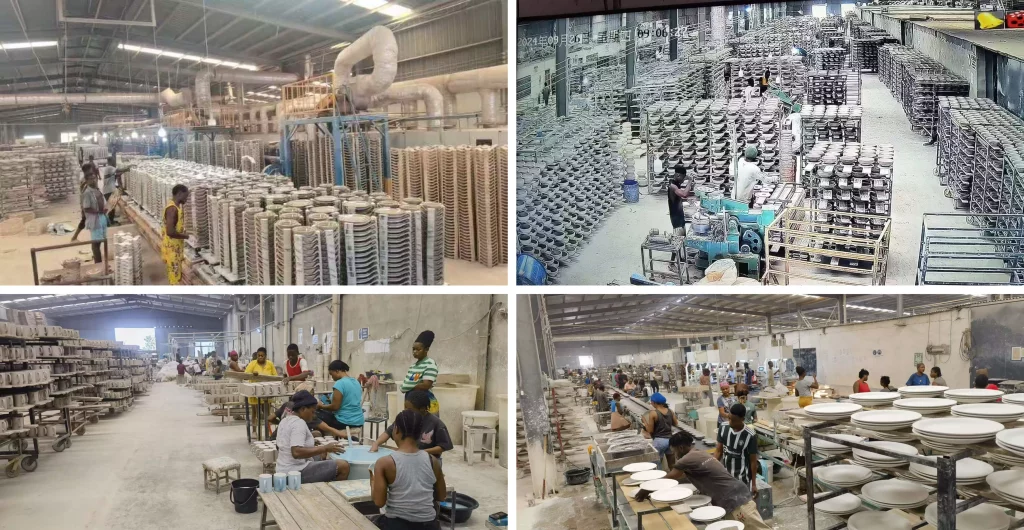
Four factory-floor views showing workers, stacks of plates and rows of ceramic ware on racks
Production-floor archive: ware handling, racks and workstations. Project-specific manufacturing details are confirmed during sourcing review.

A manufacturing route to explore

A Nigeria manufacturing route, built around your brief

If you are comparing a ceramic tableware manufacturer in Africa, start with the product, intended use and destination. The partner-factory route described here is in Nigeria. Define the range and order profile, then confirm the proposed factory, production stages and product records for the items you want to source.

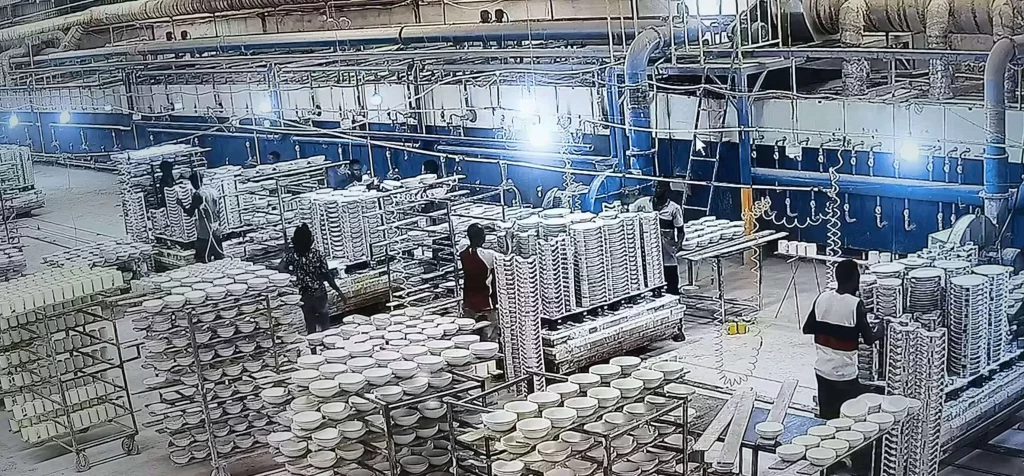
Rows of ceramic ware, production equipment and kiln-floor workstations
Production-floor archive; confirm the route for your selected item.

Partner-factory production

Discuss the proposed Nigerian factory and production stages for your plates, bowls or coordinated tableware range. Match the brief to the confirmed equipment, available materials and sampling plan before setting a production commitment.

Patented technology transfer

Our proprietary invention-patent process know-how is shared with African partner factories, including our partner plant in Nigeria. Agree the local implementation and training scope, then review physical samples against your product specification.

A range you can evaluate

Bring reference shapes, dimensions, finish preferences and packaging requirements. Review physical samples for appearance, fit and intended use before deciding which items belong in the first order or later replenishment.

Opportunity with clear conditions

Assess Nigerian tableware sourcing for the EU

A Nigeria-based manufacturing route may be relevant to EU buyers seeking non-China origin tableware, but the production location alone does not establish a product's origin or customs treatment. Review the product, manufacturing facts, classification and required proof for each order. The standard EU GSP is a reduced-duty route, not a blanket zero-duty or tax-free promise.

Nigeria and product classification

Confirm the proposed manufacturing country and the product's customs classification with your importer or customs adviser. Ceramic tableware, kitchenware and decorative collectibles should not automatically receive the same tariff treatment.

Product-specific manufacturing origin

Record where the relevant manufacturing stages take place and which inputs are used for the particular item. Origin depends on the applicable rules and product facts. Transshipment or repacking alone is not a route to a new manufacturing origin.

Preference and import charges

Check product eligibility and required proof before relying on a reduced customs duty. Include import VAT, any applicable trade measures, clearance and logistics in the buying decision. No blanket exemption is promised.

Evidence for the shipment

Plan origin documentation before the first order

Ask for a project document checklist early enough to resolve gaps before production and shipment. Your importer or customs adviser should review the evidence against the applicable origin rules. Keep product descriptions and manufacturing records consistent with the order and the goods presented for clearance.

  1. Manufacturing record: Request the factory identity, location, production-stage description and relevant input records. Establish which records the supplier can provide and how they relate to your specific products.
  2. Shipment document set: Agree the invoice description, packing information and required origin evidence for the chosen route. Confirm the form and issuer or exporter requirements rather than assuming one certificate fits every country.
  3. Buyer review point: Have your import team review the proposed classification and origin basis before committing to a tariff assumption. Confirm the final document set for each shipment, especially if inputs or production locations change.

Compare the complete order

Put sample quality beside landed cost

Compare sourcing routes using the same product specification, quantity and delivery terms. A lower customs-duty scenario is useful only alongside acceptable product performance, reliable packing and a workable replenishment plan. Request a landed cost review that makes assumptions visible instead of relying on a headline saving.

Product and use

Agree the ceramic body, finish, dimensions and tolerances. Define food-contact testing for the target market and any dishwasher, microwave or thermal-use requirements; those properties need evidence for the specific product.

Packing and repeat orders

Review protective packing, carton configuration and delivery handling. For repeat purchases, agree a reference sample and acceptable variation so that replacement plates and bowls can be evaluated against the original range.

Cost assumptions

Compare quoted product cost, tooling, testing, packing, freight, insurance, clearance, applicable duties and VAT treatment under agreed delivery terms. Confirm lead time and minimum order quantity in the project quotation; this page offers no fixed capacity or savings figure.

From enquiry to a sourcing decision

Choose a ceramic tableware supplier in Nigeria with a clear review sequence

Share your EU destination, product references, expected order quantity and required delivery window. Include whether the order is for a retail collection, hospitality programme or private-label range. A focused brief lets the factory, development team and import adviser evaluate the same requirements.

  1. Define the buying brief: product list, dimensions, material preferences, target use, destination, quantities and delivery terms.
  2. Review the proposed Nigerian partner factory, local process and any applicable technology-transfer scope; confirm availability and sampling milestones.
  3. Evaluate samples, packing and the product-specific quality or compliance evidence required by your market.
  4. Review classification, manufacturing origin, preference eligibility and the proposed document set with your import adviser.
  5. Compare the complete quotation and landed cost assumptions, then agree the order, shipment checks and replenishment plan.

Before we begin

Good questions.
Clear next steps.

Can African-made ceramic tableware qualify for duty-free EU import?

It may qualify under an applicable preferential arrangement when the particular country, product and origin requirements are met and the required proof is available. Review the proposed goods and shipment with your importer or customs adviser. Import VAT and other charges are separate from preferential customs duty.

Does shipping through Africa change the origin of Chinese-made tableware?

No. A new shipping route does not itself establish a new origin. Any non-China origin claim must follow the applicable rules and the actual manufacturing facts. The proposed production stages and input records should be reviewed before a buyer relies on the claim.

How does EU anti-dumping treatment affect a sourcing comparison?

EU measures apply to defined products and origins. Regulation (EU) 2026/274 concerns covered ceramic tableware and kitchenware originating in China; it should not be treated as a rule for every ceramic collectible. Review the specific classification, origin and measures in force for your shipment before comparing costs.

What should I request when evaluating a ceramic tableware supplier in Africa?

Request the proposed factory and country, production-stage details, a sample plan, a product-specific testing plan, packing information and an origin-document checklist. Ask for a quotation with clear delivery terms, quantity assumptions and lead time. Factory imagery alone cannot establish capacity, certification or customs eligibility.

Can patented ceramic technology support local production?

Technology transfer is part of our African partner-factory programme. The applicable patent, permitted use and implementation scope need to be matched to the individual project. Review trial samples and local process requirements before assuming the technology delivers a particular finish, throughput or product performance.

Can I develop a private-label range or hospitality collection through this route?

Bring your designs, material preferences, intended use and order profile for a feasibility review. Sampling, decoration, packing and replenishment requirements are confirmed for the selected factory. Explore our OEM development, materials and hospitality pages to prepare the product side of the brief.
Your next collection

Review your Nigeria sourcing route.

Bring your product specification, EU destination and order profile. Compare samples, manufacturing records and complete cost assumptions.

Discuss your Nigeria sourcing project